Context
A studio thesis, tested on a real product.
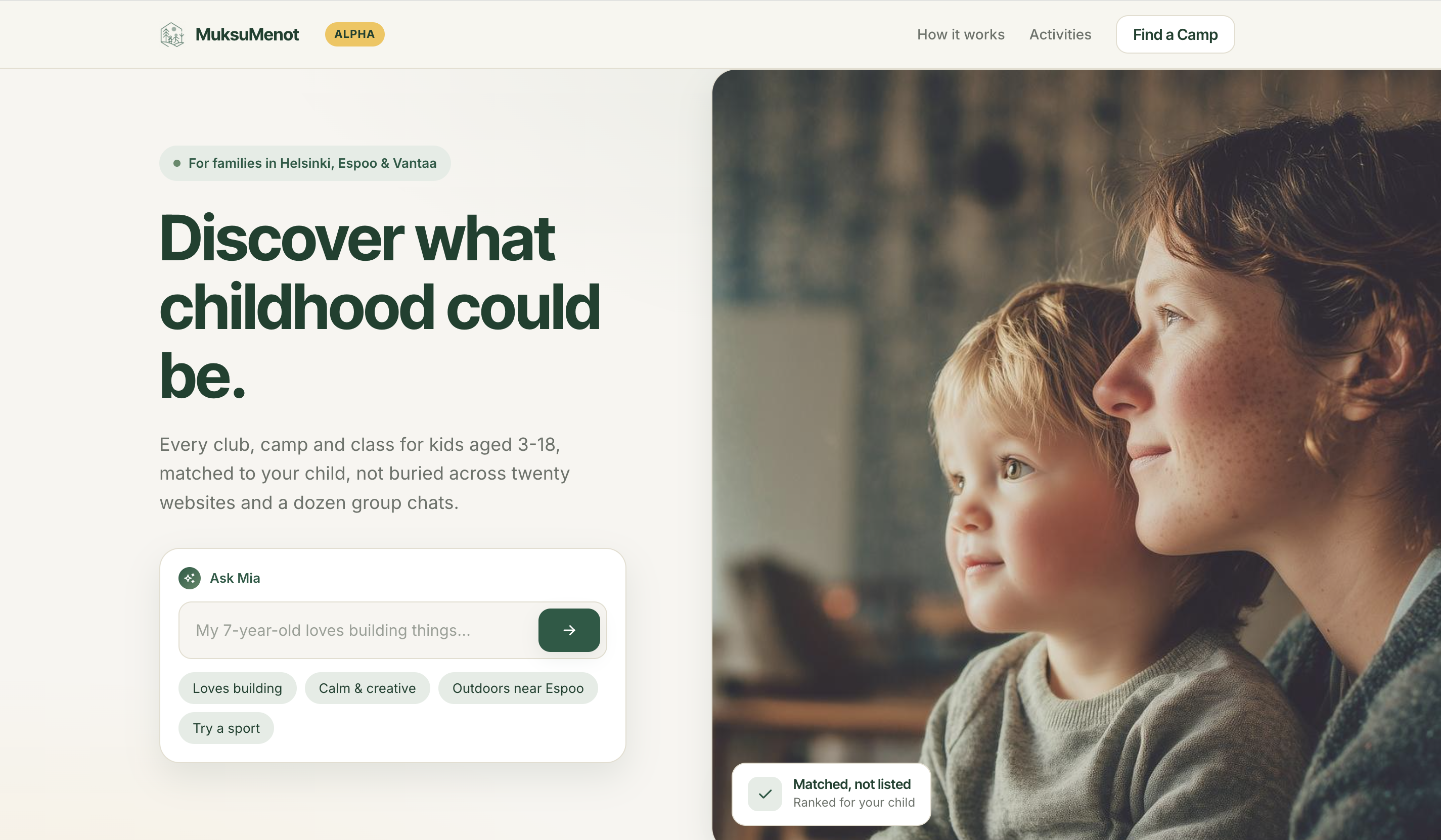
MuksuMenot started as a test of a thesis. While setting up Triple Pepper, I wanted a project that would prove the studio's whole stack in one build: product strategy, product design, product management and serious AI integration, not a demo bolted onto a landing page.
The gap found me. Every summer, parents across Helsinki, Espoo and Vantaa run the same gauntlet: dozens of council sites, club pages and camp providers, none of them speaking to each other, all of them structured for the organisation rather than the family. There was no single place to plan a child's season.
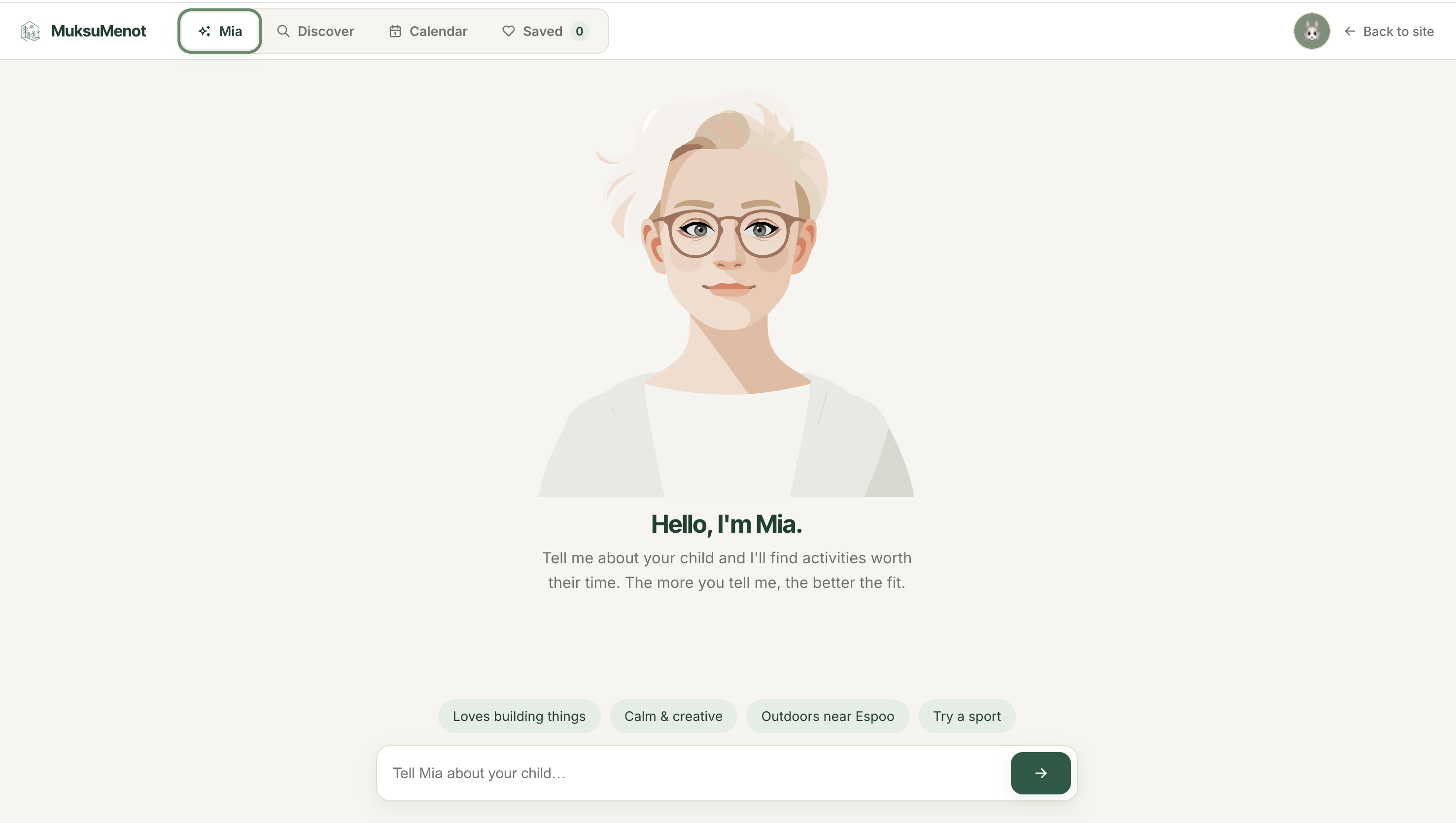
So the brief became: a calmer way for families to find the right activities. Discovery and comparison in one place, with an AI assistant, Mia, doing the matching instead of the parent doing the searching.
Challenge
One obvious problem, and one that was the real work.
The obvious one: aggregate a fragmented supply side. Activity data lives with local councils and independent camp providers in inconsistent formats, so we spent real time enquiring directly with councils and suppliers to get the data pipeline honest, and to keep providers verified before they appear.
The real one: this is a product about children. That makes data protection the design constraint, not a compliance checkbox at the end.
The decision
Cut against our own roadmap to stay GDPR clean.
The hardest call of the project was what to cut for version zero.
For version zero we chose the second principle and cut scope against our own roadmap, building deliberately conservative ways of sourcing and holding data to keep everything above board from day one.
Slower product, smaller v0, right call. Trust is the product's core feature; you cannot patch it in later.
Execution
Heavy lifting in the background, calm on top.
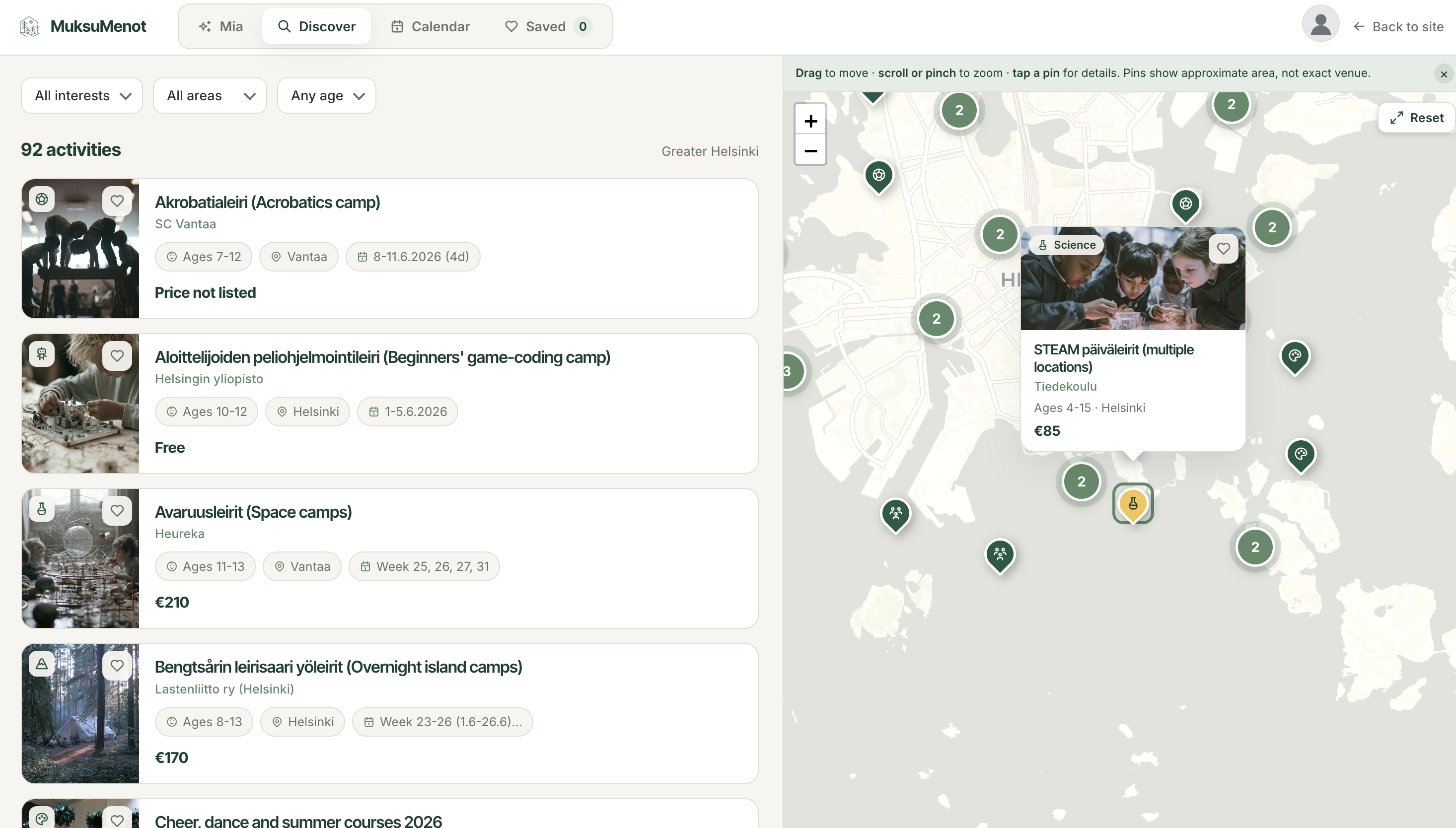
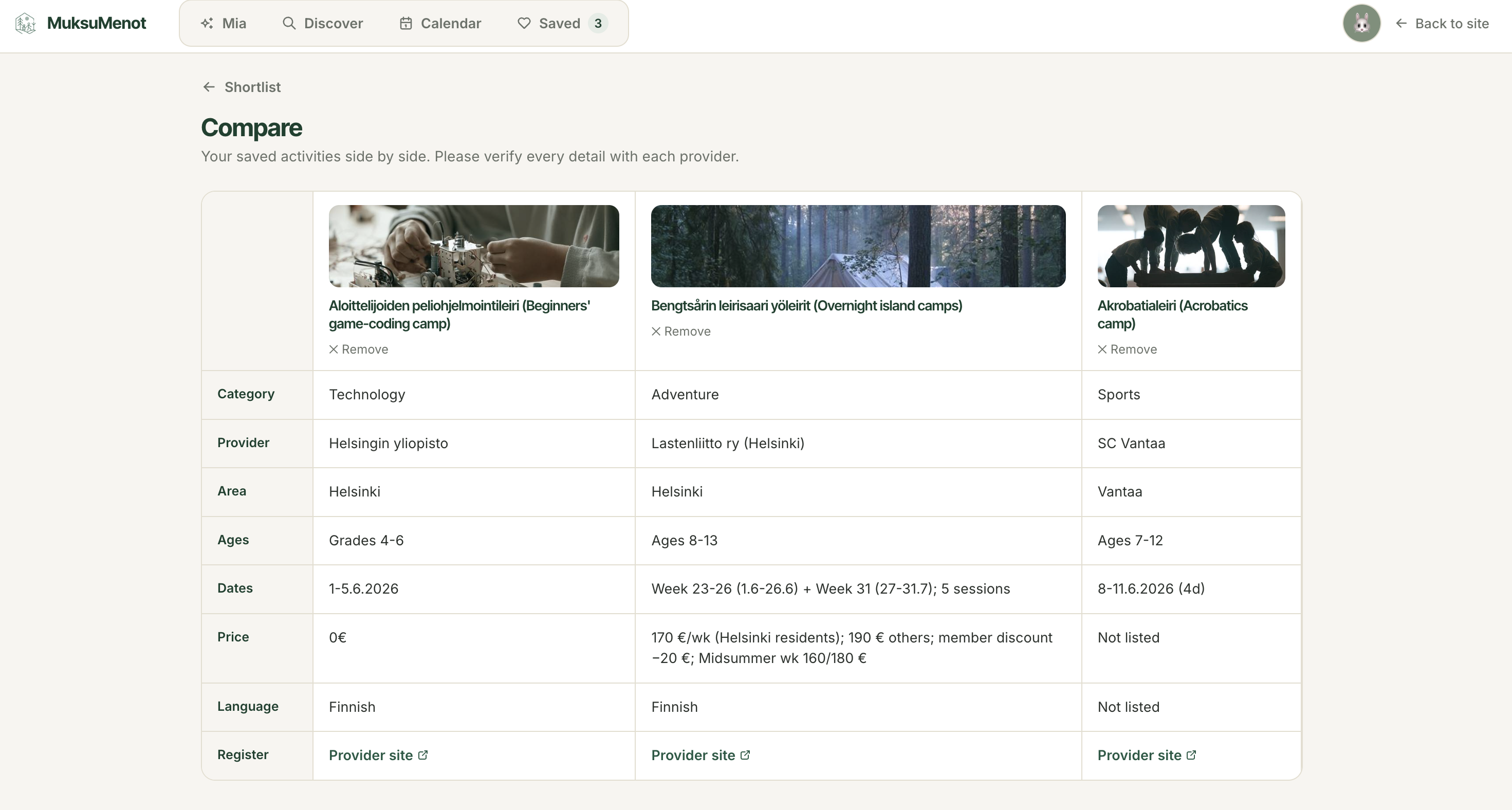
The AI does immense work behind the interface: classifying and normalising provider data, matching activities to age, interest and area, and powering Mia's recommendations. The surface stays deliberately calm: describe your child in a sentence, filter by interest, age and area, explore on a map, keep a shortlist. The AI is designed into the product, not bolted on after.
Built and tested through spring 2026 with rounds of user testing with local families, iterating the flows the tests broke.
Outcome
Launching honest: this season is a live test.
Version zero launches 31 July 2026, covering Helsinki, Espoo and Vantaa. Free to explore, with Mia's planning as a subscription.
This first season is deliberately framed as a test. The learnings from real families, real providers and real plans drive version one. That is the honest shape of a new product, and we would rather publish it than pretend to scale we do not have.
Reflection
What this proved about the studio.
A small independent team with AI in the workflow can take a real, regulated, two-sided product from idea to launch in one season.
The most valuable design skill on an AI product is deciding what the AI must not do.
And working in the open, seasonal test and all, builds more trust than pretending.